

Introduction
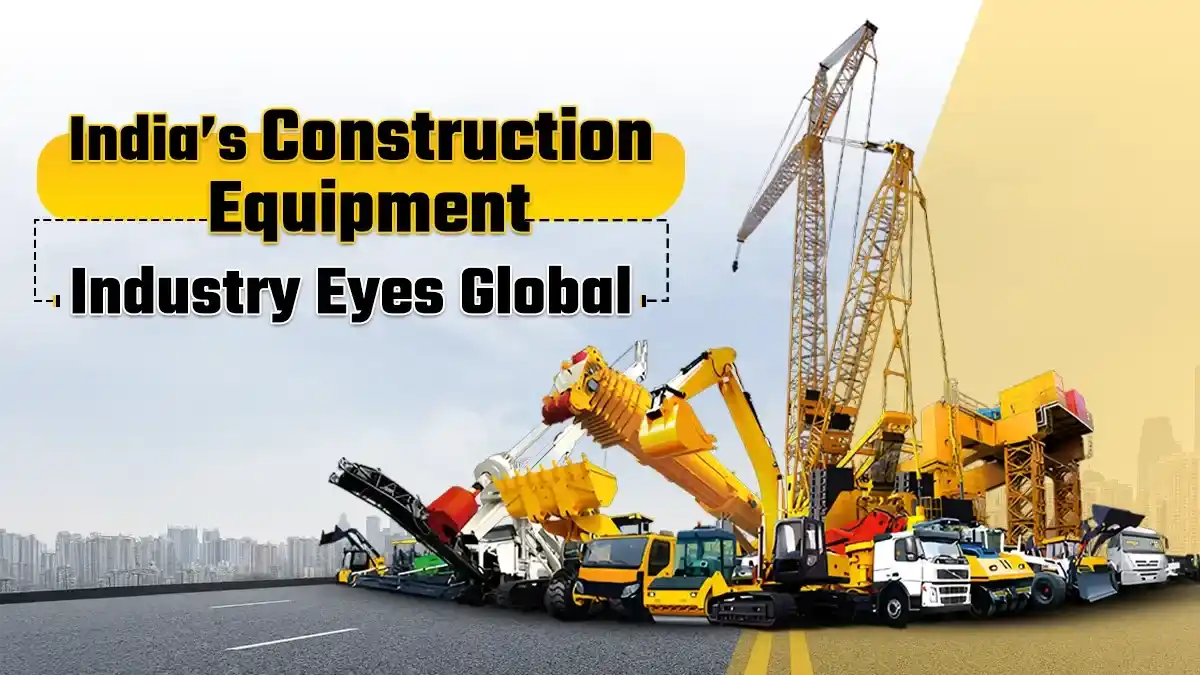
The construction equipment industry is a foundational pillar of India’s infrastructure ecosystem. Every highway, metro corridor, industrial park, and housing project depends on the timely availability and effective deployment of heavy machinery. Excavators, loaders, cranes, road pavers, and compactors are not merely tools of construction—they are productivity multipliers that determine project speed, safety, and economic efficiency.
As India accelerates its infrastructure ambitions through large-scale public investment and private sector participation, the construction equipment sector has emerged as a critical enabler of execution. Its growth trajectory closely mirrors the pace of infrastructure development and offers early signals of investment momentum across the economy.
Current Market Performance and Industry Momentum
India’s construction equipment industry has demonstrated strong performance in recent years, reflecting the sustained push toward infrastructure-led growth. Rising demand across road construction, urban infrastructure, irrigation, mining, and real estate has driven higher equipment utilisation and fleet expansion.
Sales volumes have grown steadily, supported by large infrastructure projects and increased mechanisation across construction activities. Earthmoving equipment continues to dominate the market, accounting for the largest share of sales, followed by material handling, road construction equipment, and concrete machinery.
This growth highlights a structural shift in India’s construction practices—from labour-intensive methods toward mechanised and technology-driven execution. The trend is particularly visible in time-bound public projects where speed, consistency, and safety are critical.
Market Outlook and Long-Term Growth Potential
Looking ahead, the construction equipment industry is expected to maintain a strong growth trajectory through the remainder of the decade. Industry forecasts indicate a sustained compound annual growth rate driven by:
- Continued government infrastructure spending
- Expansion of urban and regional connectivity projects
- Rising private investment in industrial and commercial construction
- Increased equipment penetration in smaller contractors and regional markets
India is positioned to become one of the world’s largest construction equipment markets as infrastructure investments scale and mechanisation deepens across sectors. Unlike cyclical commodity-driven growth, this expansion is rooted in long-term development priorities, providing stability and predictability to the industry.
Structural Drivers of Industry Expansion
Infrastructure-Led Demand
Public infrastructure programs form the backbone of equipment demand. Road networks, metro rail systems, ports, airports, renewable energy infrastructure, and industrial corridors require continuous deployment of heavy machinery across project phases. Multi-year project pipelines ensure recurring demand rather than one-time procurement cycles.
Rising Mechanisation Across Construction
Labour shortages, productivity pressures, and tighter project timelines are accelerating the adoption of mechanised solutions. Contractors are increasingly investing in modern equipment to reduce dependency on manual labour and improve output consistency. This shift is evident not only in large projects but also among mid-sized and regional contractors.
Geographic Market Expansion
Equipment demand is no longer concentrated only in major urban centres. Tier-2, Tier-3, and rural regions are emerging as important growth markets due to increased spending on roads, irrigation, rural housing, and local infrastructure. Compact and versatile equipment is gaining popularity in these regions, expanding the overall market base.
Technological Evolution in Construction Equipment
Technology is reshaping the construction equipment industry. Modern machines are increasingly integrated with digital systems that enhance efficiency, safety, and lifecycle performance.
Key technological trends include:
- Fuel-efficient and low-emission engines aligned with stricter environmental norms
- Telematics and machine monitoring systems for real-time performance tracking
- Automation-assisted controls that improve operator precision and safety
- Predictive maintenance tools that reduce downtime and operating costs
These innovations are transforming equipment from mechanical assets into intelligent productivity platforms, enabling better asset utilisation and data-driven decision-making on construction sites.
Challenges Facing the Construction Equipment Industry
Despite its positive outlook, the industry faces several structural and operational challenges that must be addressed to sustain long-term growth.
Demand Cyclicality and Project Timing
Equipment demand is closely tied to project execution schedules. Delays in approvals, funding releases, or land acquisition can temporarily slow procurement, creating fluctuations in domestic sales even within a broader growth cycle.
Supply Chain and Import Dependence
A significant portion of critical components used in construction equipment manufacturing is still imported. This exposes manufacturers to currency volatility, supply disruptions, and geopolitical risks. Strengthening local supply chains and component manufacturing remains a key priority for the industry.
Skilled Workforce Constraints
As machines become more technologically advanced, the need for skilled operators and maintenance technicians increases. The shortage of trained manpower can limit optimal equipment utilisation and affect safety and productivity on sites.
Ownership and Financing Barriers
High capital costs remain a constraint for smaller contractors. While equipment rental and leasing models are growing, access to affordable financing and structured asset ownership solutions is essential for deeper market penetration.
Strategic Importance of the Sector
The construction equipment industry plays a strategic role far beyond manufacturing and sales. Its performance directly influences infrastructure execution timelines, project costs, and overall construction efficiency.
A robust equipment ecosystem enables:
- Faster project delivery through mechanised execution
- Improved safety standards on construction sites
- Better quality control and consistency in infrastructure assets
- Enhanced competitiveness of Indian construction firms
From a national development perspective, a strong domestic equipment industry also supports manufacturing growth, employment generation, and export competitiveness.
The Road Ahead
The future of India’s construction equipment industry will be shaped by its ability to align with infrastructure priorities, embrace technological innovation, and overcome supply and skill constraints. Companies that invest in localisation, digital capabilities, training ecosystems, and customer-centric service models will be best positioned to lead the next phase of growth.
As infrastructure execution becomes increasingly time-sensitive and performance-driven, construction equipment will continue to act as a decisive enabler of India’s development ambitions.
Conclusion
India’s construction equipment industry stands at a critical juncture. Backed by sustained infrastructure investment, rising mechanisation, and technological evolution, the sector is poised for long-term expansion. While challenges related to demand cycles, supply chains, and skills remain, the industry’s strategic importance within the construction ecosystem is undeniable.
As India builds for the future, construction equipment will remain at the heart of progress—powering projects, enabling efficiency, and supporting the nation’s growth journey.